Best Performing Real Estate Facebook Ad Creatives (2026)
A visual teardown of the real estate Facebook and Instagram ad patterns that do the best job of stopping the scroll, clarifying the offer, and driving qualified clicks.
This report reviews live creative styles across seller, buyer, mortgage, cash-offer, new-construction, and price-point campaigns. The goal is not to crown a single design style. It is to isolate which message structures repeat across strong performers and why they translate into better campaign economics on the Walled Garden platform.[1,3]
headline before details drives scroll-stop behavior
Best fit
$10–$25/day
typical active campaign budget on-platform
Goal of this report
Pattern clarity
what to emphasize, simplify, and repeat
Core Findings
Lead with the offer, not the brokerage
The strongest creatives state the outcome immediately: Brand New Townhomes, Cash Offer in 24 Hours, Homes Under $600,000, or 100% Financing. High-intent audiences decide in seconds whether an ad matches their current mission.[1]
Use the image to prove the promise
The background image works best when it instantly verifies the headline — remodeled kitchen for new construction, desirable exterior for cash-offer speed, skyline or neighborhood context for price-point ads, and aspirational lifestyle imagery for buyer-financing offers.[1,3]
Keep copy simple under housing rules
Housing ads must stay broad and compliant. These examples succeed by focusing on property value, timing, financing, and location context instead of personal-attribute targeting or exclusionary copy.[2,4]
Creative Review
Nine creative examples, broken down by offer structure and click intent.
Ratings below are editorial strength assessments based on message clarity, visual proof, and expected fit with known campaign patterns — not audited per-image performance exports.
Listing / New ConstructionHigh strength
New construction — lifestyle-led townhome offer
Primary angle
Move-in-ready inventory
Why it works
Large serif headline, restrained color system, and an interior that immediately sells cleanliness, light, and finish quality. This is strong for buyers comparing newly built inventory versus resale homes.
When to use it
Use when the property itself is the primary hook and the finish package can carry the creative.
Seller / Social ProofHigh strength
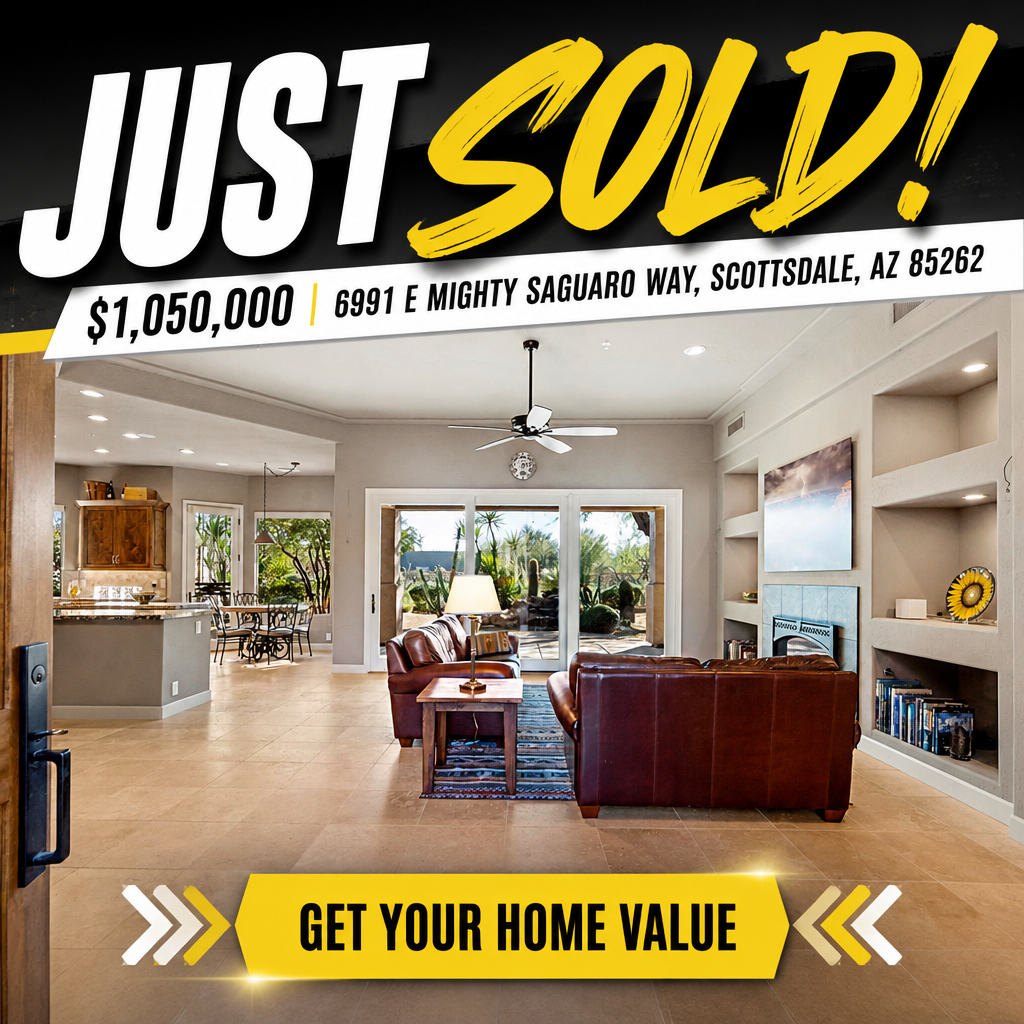
Just sold — contrast-heavy proof creative
Primary angle
Proof of execution
Why it works
The black, white, and yellow palette stops the scroll immediately. Price and address create specificity, while the sold message acts as instant credibility for nearby homeowners considering their own sale.
When to use it
Best for seller-retargeting, sphere-of-influence audiences, and geographic farm campaigns that need visible momentum.
Seller / ValuationHigh strength
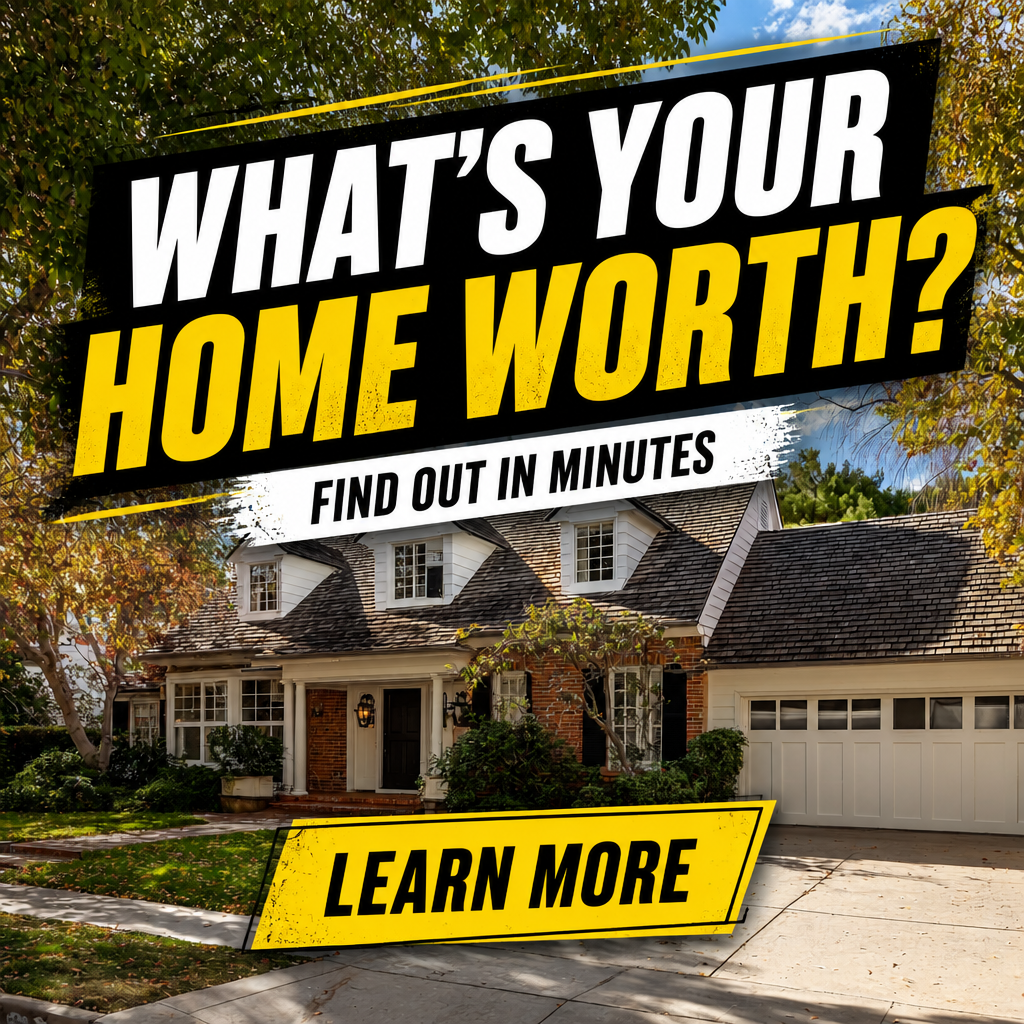
Home value — bold direct-response angle
Primary angle
Low-friction curiosity
Why it works
Question-based headlines convert well when the outcome is obvious and immediate. This creative removes complexity and makes the next step feel fast rather than consultative.
When to use it
Use for top-of-funnel seller acquisition when speed and curiosity matter more than education depth.
Mortgage / BuyerMedium-High strength
First-time buyer — coastal aspiration
Primary angle
Dream-state with a concrete financing hook
Why it works
The aspirational scene gets attention, but the financing line gives the viewer a reason to believe the dream may be accessible now. It pairs emotion with a practical next step.
When to use it
Works best when the lender has a clear first-time-buyer program and the CTA leads to qualification, not generic education.
Mortgage / BuyerHigh strength
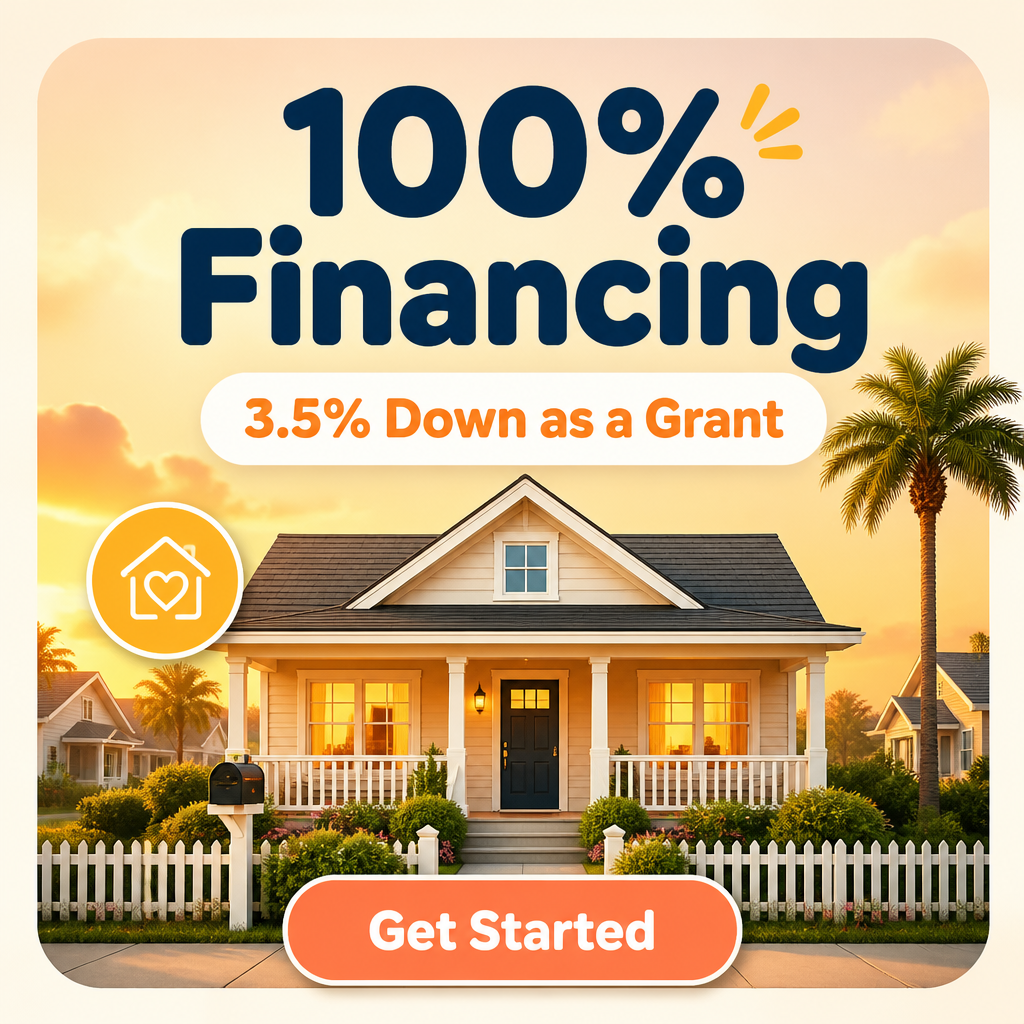
First-time buyer — grant-led offer card
Primary angle
Program-first clarity
Why it works
Compared with lifestyle-led mortgage creative, this one is simpler and more literal. It makes the program itself the ad. That usually improves qualification quality when the benefit is rare or highly specific.
When to use it
Use for offer-aware audiences and lead forms where clarity beats atmosphere.
Seller / ValuationMedium-High strength
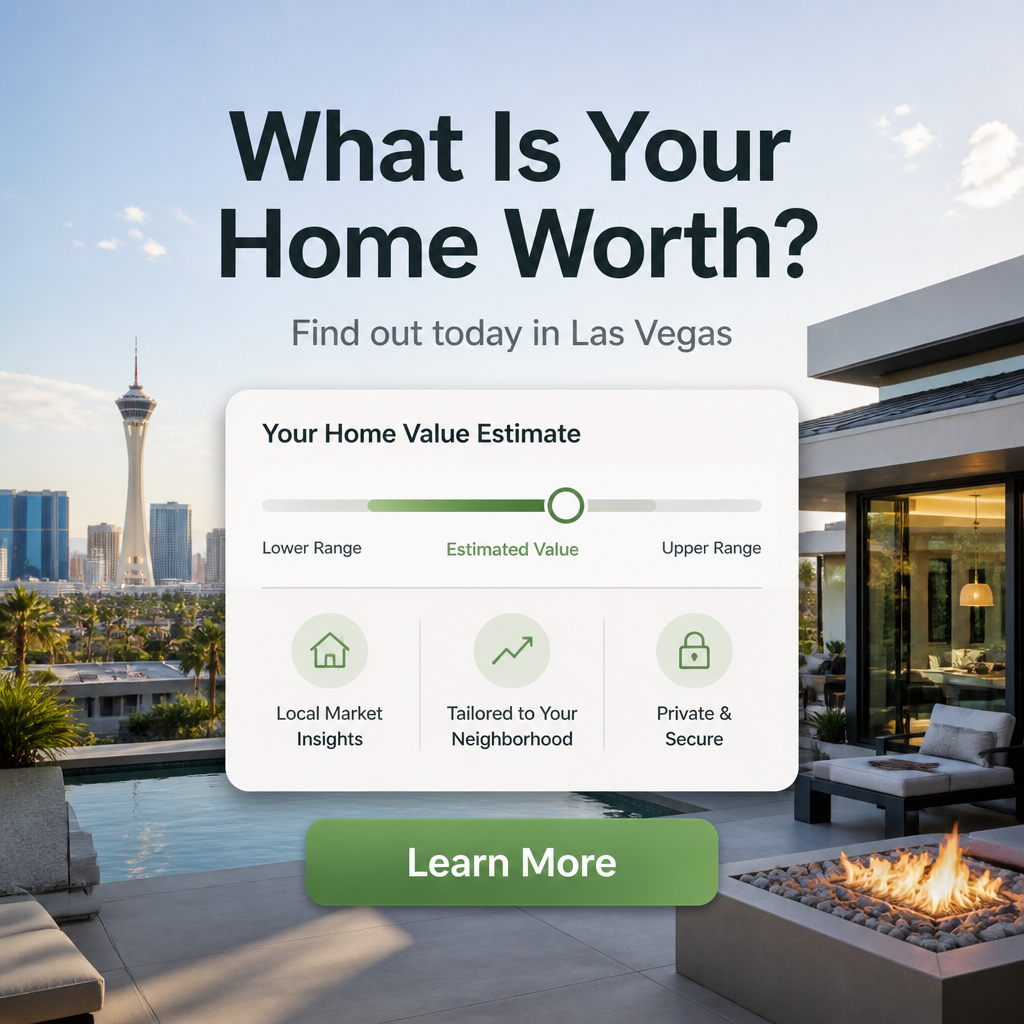
Home value estimator — tool visualization
Primary angle
Productized estimate experience
Why it works
The estimate UI implies a more credible, tool-driven experience rather than a basic form. That can raise perceived value and trust for homeowners hesitant to talk to an agent immediately.
When to use it
Strong when the destination page or lead flow reinforces the same estimate concept instead of switching to a generic contact form.
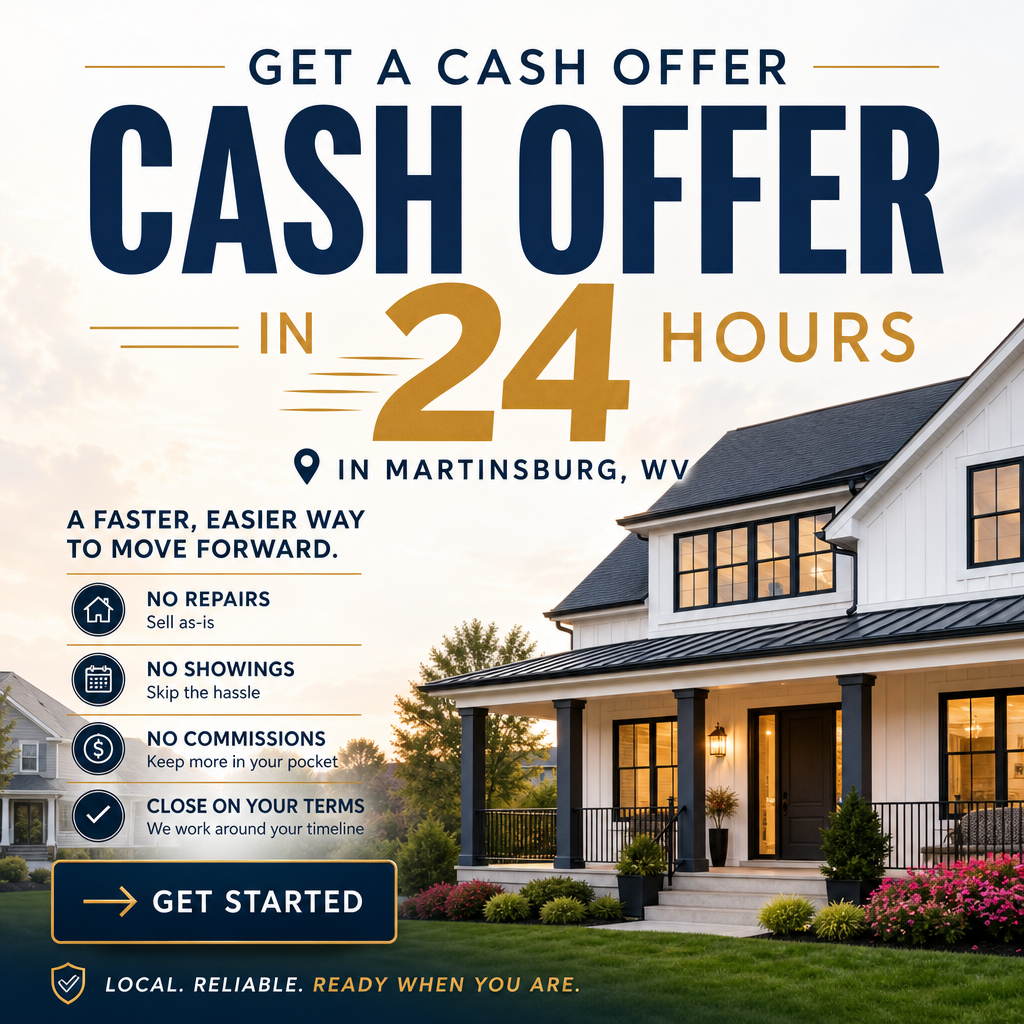
Seller / Cash OfferHigh strength
Cash offer — speed and certainty
Primary angle
Timeline-based urgency
Why it works
This is one of the clearest examples of benefit-first creative. The promise is time-bound, the supporting bullets remove objections, and the home exterior keeps it grounded in real estate instead of generic direct response.
When to use it
Use when the offer has operational backing. Strongest when the landing page repeats the same 24-hour promise above the fold.
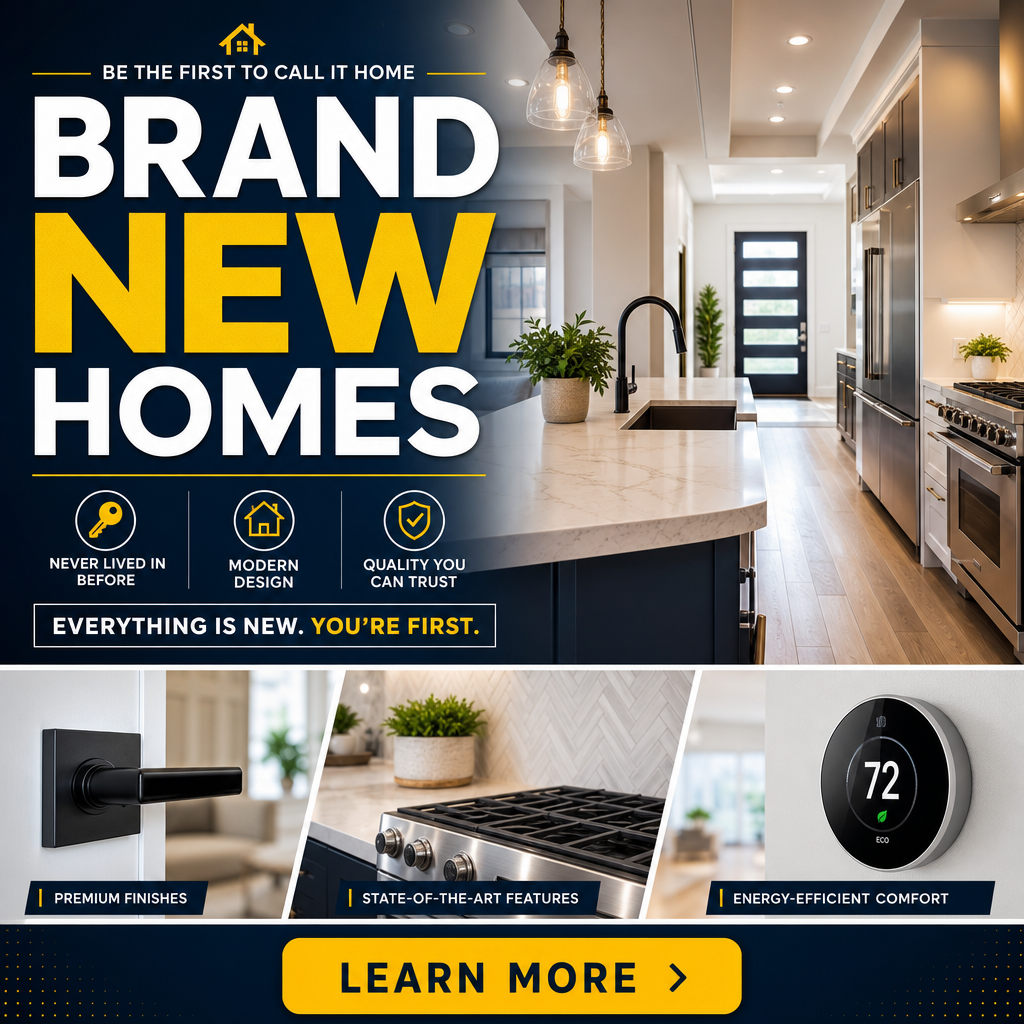
Listing / New ConstructionMedium-High strength
New construction — feature-grid explainer
Primary angle
Objection handling in-image
Why it works
This creative adds more information without feeling like a flyer. The secondary feature panels help buyers justify the click by answering what is actually new, premium, or different.
When to use it
Use after audience awareness already exists or when the listing has standout upgrade language worth surfacing visually.
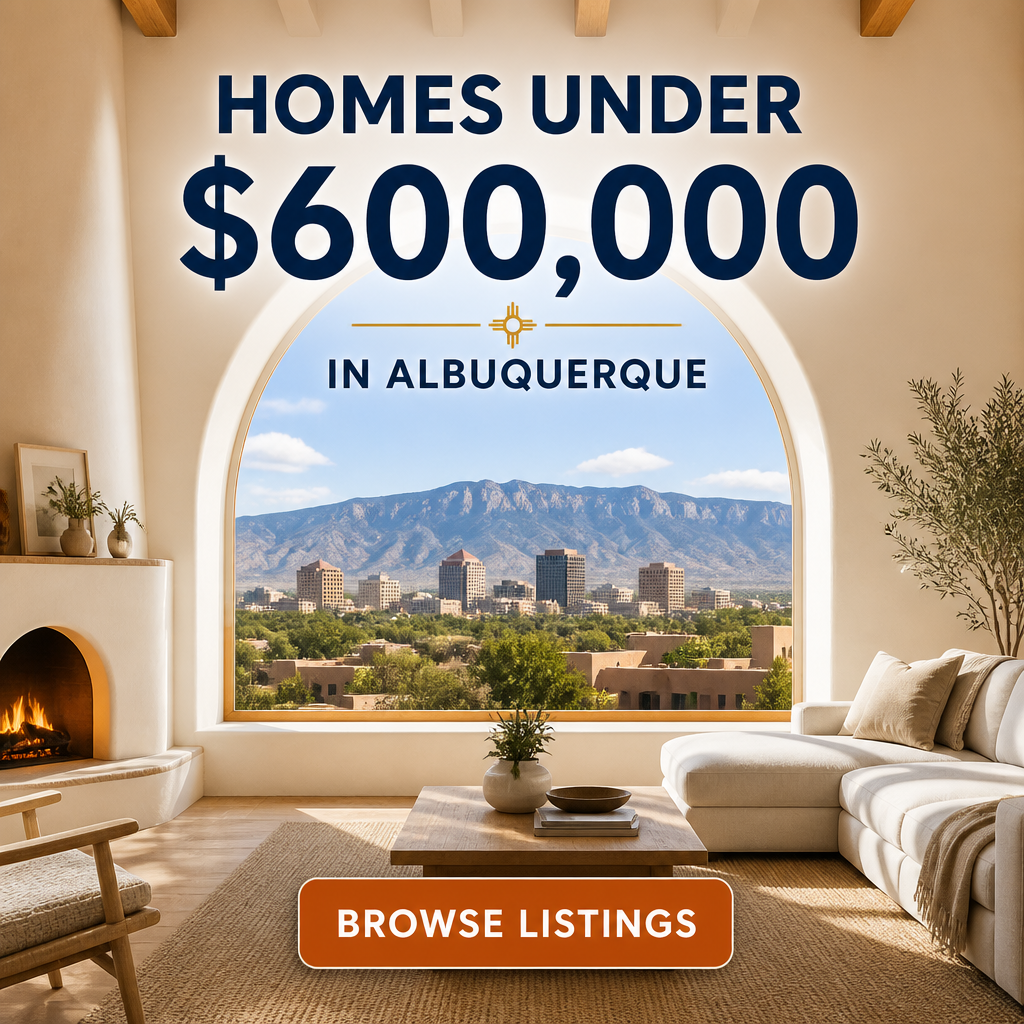
Buyer / Price PointHigh strength
Homes under price point — inventory shortcut
Primary angle
Budget-defined search shortcut
Why it works
Price-point ads perform because they collapse a broad search into a simple self-qualification filter. If the buyer fits the budget, the ad instantly feels relevant.
When to use it
Ideal for list-of-homes style funnels and city-specific inventory offers where the market name meaningfully improves click intent.
Pattern Benchmarks
Which creative pattern matches which campaign objective?
These are the campaign types most closely aligned to the uploaded creative set and the platform ranges they usually live inside. Use them as planning benchmarks, not guarantees.[1]
Creative pattern
Best use
Typical platform range
Creative guidance
Seller valuation / home-worth
Top-of-funnel seller lead capture
$8–$23 CPL
Use question-based headlines or estimator visuals, then match the same promise on the destination page.
Buyer financing / first-time buyer
Education + qualification
$6–$8 CPL
Make the offer specific enough that the lead understands who qualifies before clicking.
Price-point inventory
List-of-homes and search shortcut campaigns
$6–$8 CPL
Lead with city + budget ceiling. The clearer the inventory constraint, the stronger the click intent.
Cash-offer / speed
Distressed or convenience-led seller acquisition
$8–$23 CPL
Only promise a timeline you can operationally fulfill. Repeating the speed promise across ad and landing page matters.
New construction / feature-led listing
Community launches and standing inventory
$6–$10 CPL
Use when the property visuals are clean and differentiated enough to earn the click on image quality alone.
Methodology
How this report should be used.
This is a pattern-analysis report, not a raw export of one advertiser account. The creative set comes from real real-estate and mortgage ad examples you provided, then we classified each creative by offer structure, visual proof, and likely fit with known campaign objectives on the Walled Garden platform.[1]
The category ranges shown in this report reference aggregated platform benchmarks already established in Walled Garden research: active daily budgets typically fall between $10 and $25, buyer-lead campaigns usually land in the $6–$8 CPL band, and seller-focused campaigns usually land in the $8–$23 CPL band depending on intent depth and market pressure.[1]
Because housing campaigns operate under Meta Special Ad Category rules, strong creative matters even more. You have fewer targeting levers, so the ad itself must do more work to qualify the click, frame the offer, and establish trust without relying on prohibited targeting language.[2,3]
FAQ
Short answers for marketers, agents, and teams.
What type of real estate Facebook ad creative performs best?
The best-performing real estate Facebook ad creatives usually lead with a very clear offer: a home-value estimate, a price-point inventory promise, a cash-offer timeline, a financing program, or a new-construction angle. The strongest images then prove that promise immediately.
What makes a seller lead ad creative work?
Seller creatives work best when they focus on curiosity, certainty, or proof. Home-worth ads create curiosity, cash-offer ads create certainty, and just-sold ads create proof that the advertiser can move listings in the local market.
Should a real estate ad show more information or less?
Most prospecting ads work better with less information and a stronger headline. Add more detail only when the extra information helps answer the main objection, as in new-construction feature grids or estimator-style visuals.
Do price-point ads work for buyer lead generation?
Yes. Price-point ads often perform well because they act as an instant self-qualification filter. A buyer either identifies with the budget range or does not, which improves click relevance.
How should real estate creatives handle compliance?
Housing ads should stay focused on the property, the financing offer, the timeline, or the search criteria. They should not rely on copy that implies targeting by protected characteristics or exclusionary audience language.
Can I cite this report?
Yes. Cite it as Walled Garden HQ, Best Performing Real Estate Facebook Ad Creatives (2026), and link to walledgardenhq.com/research/best-performing-real-estate-facebook-ad-creatives.
Sources
Citations
[1]Walled Garden HQ — Aggregated Platform Data(2024–2026)Internal aggregated metrics across real estate Facebook & Instagram campaigns running on the Walled Garden platform.
Want these creative patterns built for your market?
Walled Garden HQ gives agents, teams, and partners a compliant Facebook & Instagram Ads Platform plus Ad Creative Studio workflows that turn offers like home value, cash offer, price point, new construction, and financing into launch-ready ads.