
Quick answer
Real estate Facebook and Instagram ads work best as a connected conversion system: the objective matches the desired action, the property creative makes a useful offer clear, the lead path removes friction, and the follow-up continues the conversation.
A boost is not a lead campaign
Boosted posts are built around engagement. Lead and conversion campaigns optimize toward a defined action.
The objective sets the instruction
Choose reach for visibility, traffic for visits, and lead or conversion objectives when the desired outcome is an inquiry.
Creative carries more context
Housing targeting is restricted, so the property, offer, copy, video, and destination page do more of the communication.
Follow-up completes the campaign
A submitted form is the beginning of a conversation. Routing and timely, relevant follow-up determine what happens next.
The first distinction
Boosting a post is not the same job as generating a lead
No. A boosted post optimizes for engagement on an existing post, while a lead or conversion campaign optimizes for a submitted inquiry.
The most common mistake Travis sees is evaluating every paid Facebook placement as if it were built for the same outcome. It is not. A boosted post, a traffic campaign, and a lead campaign give Meta different instructions.
| Campaign | Optimizes for | Best fit | Watch for |
|---|---|---|---|
| Boosted post | Post engagement | Likes, comments, shares, and visibility on an existing post | Do not evaluate it as though it were designed to produce leads. |
| Traffic campaign | Page visits or link clicks | Sending people to a property page, guide, or warm-audience destination | A click is not the same event as a completed inquiry. |
| Lead or conversion campaign | A submitted form or defined conversion event | Buyer lists, showing requests, valuations, and other inquiry-focused offers | The form, routing, and follow-up still have to support the promise in the ad. |
“The algorithm is literal. If you ask for traffic, it finds people likely to click. If you want an inquiry, build the campaign around that action.”
That does not make awareness or traffic campaigns wrong. Brand visibility can support a long sales cycle, and a property page may be the right destination for warm prospects. The point is to name the actual job before selecting the objective. For the detailed setup path, use the real estate Facebook ads setup guide.
Creative-led delivery
Under Housing rules, the ad has to communicate more
Because Meta's Housing Special Ad Category limits who you can target, the property, offer, and copy must tell people what the ad is about.
U.S. housing campaigns cannot use ZIP-code, age, gender, exclusion, or Lookalike Audience targeting. Location targeting has a 15-mile minimum radius. Limited detailed targeting, Custom Audiences built from the advertiser's own first-party data, and broad or Advantage+ delivery remain available.
In Travis's view, those constraints make the creative and offer more important. The image, video, copy, and destination page explain what the campaign is about. A clearly presented Scottsdale listing, Albuquerque home list, or local seller option gives both the prospect and the delivery system more context than a generic personal-brand message.
The U.S. Housing targeting baseline
- 15-mile minimum radius for location targeting
- No ZIP, age, gender, or exclusion targeting
- No Lookalike Audiences for Housing campaigns
- First-party Custom Audiences and broad or Advantage+ delivery remain available
General platform information, not legal advice. Source: Meta's Special Ad Category policy for housing.
First-hand observation
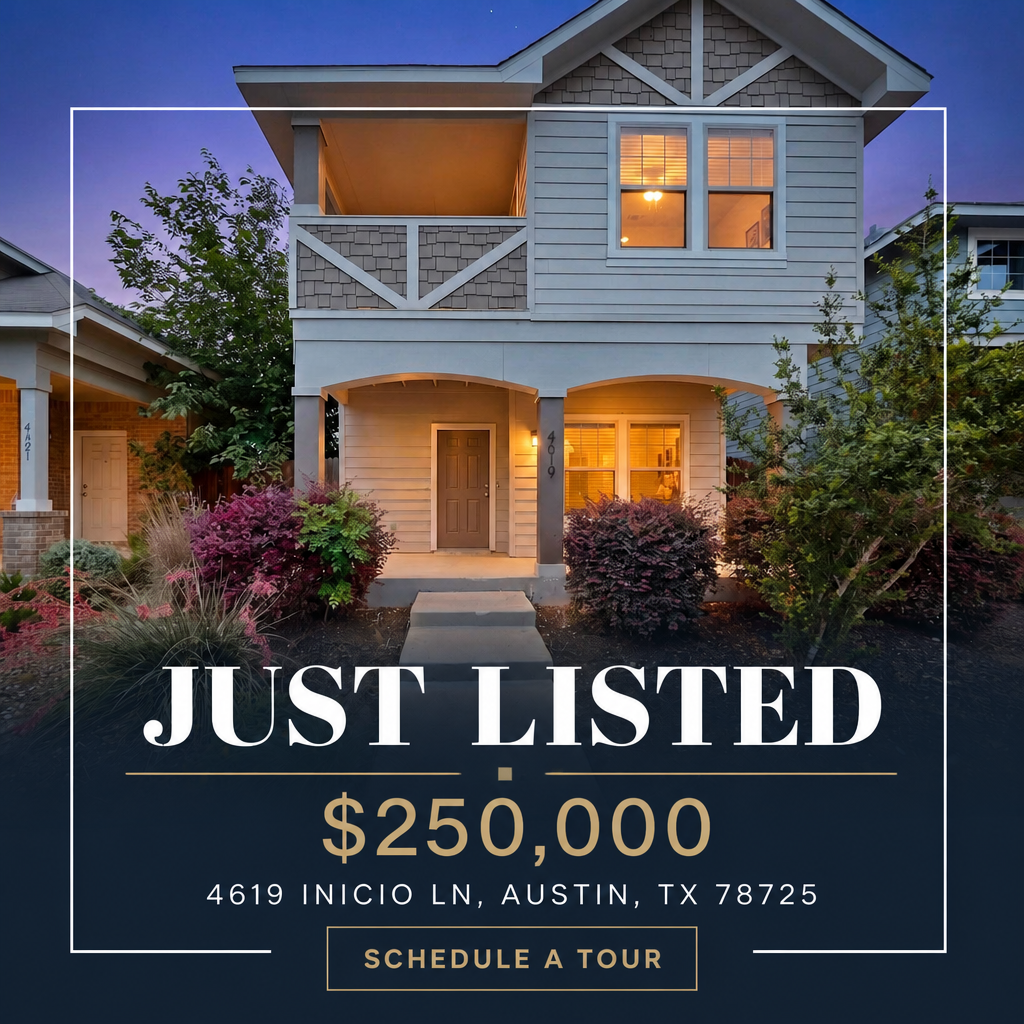
Start with the property, not an abstract promise
In Travis's experience, clear exterior photos of a real property are a stronger starting point than abstract branding or interior-first images.
Travis recalls a recurring observation from his time participating in Facebook's real estate advisory board: clear exterior residential photos tended to earn attention more efficiently than interior-first images. We are publishing that as his first-hand experience, not as a universal performance benchmark.
Show the offer
Use a recognizable home, community, price band, or seller solution rather than a vague brand image.
Make the next step specific
Ask for a showing, a home list, property details, or an RSVP—not an undefined conversation.
Keep the promise aligned
The form and follow-up should deliver exactly what the image and headline offered.
The complete lead path
The form submission is a handoff, not a finish line
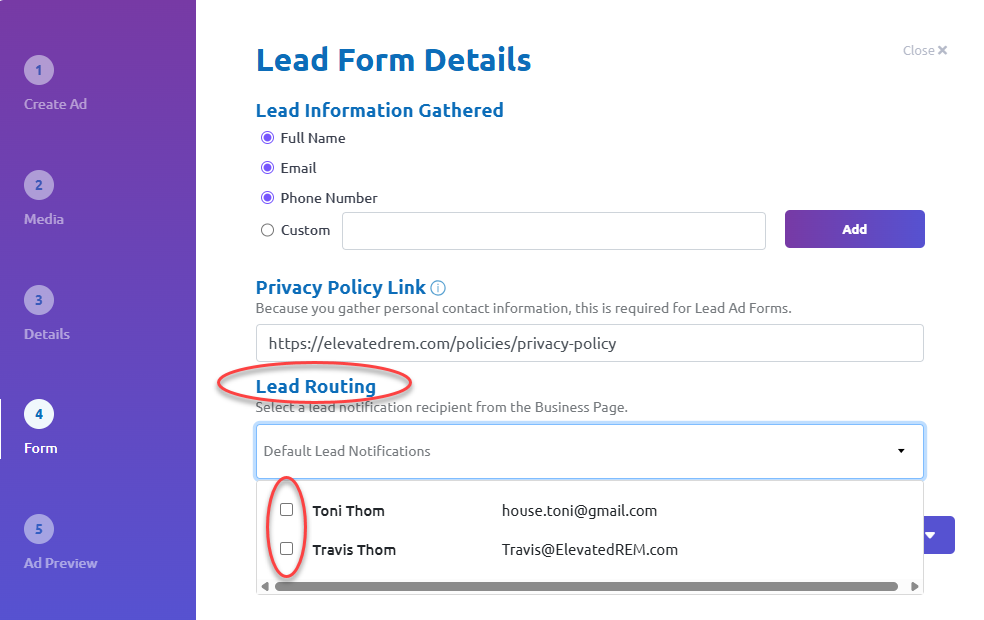
After a lead submits a form, route it to the right person with the campaign context and send a relevant response quickly.
A campaign can produce inquiries and still fail commercially if the lead arrives without context, reaches the wrong person, or sits untouched. Travis's practical rule is simple: make the next response relevant to the request and send it while the property or offer is still fresh in the prospect's mind.
- 01
Property-led ad
A listing, home list, showing, valuation, or other concrete offer.
- 02
Built-in form
Name and contact details plus only the questions needed for the next conversation.
- 03
Lead routing
The right agent or partner receives the campaign context and the prospect's answers.
- 04
Human follow-up
A relevant response begins the conversation; ongoing nurture matches the buyer's timeline.
Ask questions that improve the first call
A buyer list might ask area, price range, move timing, and whether the person already owns a home. A seller offer may ask what outcome matters most. Each field should give the agent a better opening—not create friction for its own sake.
Compare the tradeoffs in the lead ads versus landing pages guide.
For lenders and agent partners
Separate the platform from the media spend
In Walled Garden's Agency Mode, each user pays Meta directly with their own card, so the organization does not carry their ad spend.
The operating model Travis describes uses one Walled Garden platform across multiple agent relationships. In Agency Mode, each user adds their own card and pays Meta directly for their campaign's media spend. The organization can provide access and workflow without carrying the agents' ad-spend float or liability, and lead routing can send the inquiry to the appropriate participants.
That is a description of the platform's billing and routing controls—not a promise that a specific co-marketing arrangement satisfies RESPA or another law. Organizations should ask qualified counsel to review their agreements, payments, disclosures, and referral relationships.
How Walled Garden applies the system
One workflow from property to campaign to lead
Walled Garden is a self-serve Facebook & Instagram Ads Platform for real estate professionals—not an agency or CRM. Enter a listing manually or use its listing URL, build with a template, Creative Studio, or Sage, review the campaign and budget, then launch. The platform applies Meta's Housing Special Ad Category and supports built-in lead forms, notifications, and routing.
Walled Garden has no MLS/IDX integration. A campaign's media spend is separate from the platform subscription and campaign fee.
See the workflow live
Bring your market, offer, and follow-up process. We will walk through how the platform turns them into a working campaign.
Book a demoQuestions answered
Real estate Facebook ads FAQ
Sources
Primary documentation behind this article
The platform rules and legal context referenced in this interview come from these primary sources. Travis's observations are labeled as first-hand experience where they appear.
- Meta Special Ad Category Policy — Housing
Meta's official documentation of targeting restrictions for U.S. housing ads.
- Fair Housing Act — U.S. Department of Housing and Urban Development
The federal fair housing framework that housing advertising rules derive from.
- RESPA Section 8 — Consumer Financial Protection Bureau
The regulation governing kickbacks and unearned fees in settlement-service referrals.
Continue reading
Put the interview into practice
Real Estate Facebook Ads: Strategy, Costs & Examples
Choose the objective, offer, lead path, and measurement plan before spending.
Read nextHow to Run Facebook Ads for Real Estate
Follow the separate step-by-step setup guide when you are ready to build a campaign.
Read nextReal Estate Facebook Ad Examples
See property-led creative and how the hook, image, and call to action work together.
Read next