A free field guide for real estate agents
The Stalled Listing Playbook
Ten chapters on combining seller incentives, mortgage buydowns, and smarter marketing to get listings moving. Free to read — no email required.
Chapter 01
The Opportunity
The market has changed. Your listing strategy should, too.
Buyers are not simply shopping for a house. Many are shopping for a payment that feels manageable. As of October 2026, existing-home sales are running at roughly ~3.99 million annualized, with 1.60 million homes of inventory nationally — about 4.8 months of supply — and the Freddie Mac 30-year fixed average at 7.40% as of October 15, 2026 (NAR, Freddie Mac PMMS). These are dated national figures; your local market will differ.
In that environment, a stalled listing rarely has a single cause. Use this diagnosis matrix before recommending anything to a seller:
Few impressions or clicks
Views but few showings
Showings but no offers
Interest but financing stalls
One rule runs through this entire playbook: a seller incentive does not excuse overpricing, condition problems, or misrepresentation. Pricing corrections are sometimes still necessary, and incentives do not always outperform a price cut. The goal is to compare the options honestly.
Everything here rests on two levers. Affordability — financing options, credits, and pricing that change what a buyer actually pays. And Visibility — clear paid reach plus disciplined lead handling, so the right buyers actually hear about the offer. A property ad without payment appeal attracts views; an incentive nobody hears about cannot stimulate leads. You need both.
Chapter 02
The Incentive Toolkit
Six ways to create more buyer appeal.
Each strategy below solves a different buyer problem and asks something different of the seller. All terms must be confirmed with the buyer's lender before they appear in any marketing.
1. Temporary interest-rate buydown
2. Permanent discount points
3. Seller-paid closing costs
4. Flexible eligible seller credit
5. Price reduction plus credit
6. Repairs or a permitted repair allowance
| Buyer problem | Recommended strategy | Seller tradeoff |
|---|---|---|
| Payment feels too high in year one | Temporary buydown | Subsidy cost; payment steps up later |
| Long-term payment sensitivity | Permanent discount points | Higher cost per dollar of monthly relief |
| Not enough cash to close | Seller-paid closing costs | Reduces net; program caps apply |
| Mixed cash and payment pressure | Flexible eligible credit | Must specify approved uses |
| Home sits above a search band | Price cut + smaller credit | Lower headline price; run the net |
| Condition objections at showings | Repairs or repair allowance | Time, contractors, or escrow holdback |
Know the limits. Fannie Mae's interested-party contribution (IPC) caps for conventional loans are commonly 3%, 6%, or 9% for primary and second homes depending on loan-to-value, and 2% for investment properties — but these are not universal, and the buyer's lender must confirm the limit for the specific transaction (Fannie Mae IPC guide).
Chapter 03
The Payment Story
Show the buyer what an incentive actually changes.
"Seller offering $10,000 in concessions" means nothing to most buyers. "About $470 less per month in your first year" means everything. Your job is to translate the incentive into a payment story — accurately, with the lender's numbers, and with the full-term obligation shown just as prominently.
Payment comparison calculator
30-year fixed, principal & interest only. Edit the numbers to match your listing.
Loan amount: $360,000 · Rates are clamped to 4%–15% so year-one stays positive.
Year 1 · 5.40% effective
$2,021.51
≈ $471/mo below full payment
Year 2 · 6.40% effective
$2,251.82
≈ $241/mo below full payment
Year 3+ · full note 7.4%
$2,492.57
The permanent obligation buyers must qualify for
Simplified 2-1 seller subsidy
$8,542
12 × [(full − year 1) + (full − year 2)]. Actual cost is set by the lender.
Compare: $15,000 price reduction
$2,409.48/mo
≈ $83/mo lower — a smaller monthly change, but a permanent principal decrease. Neither option is universally better.
Disclosure: Principal & interest only — excludes taxes, insurance, HOA, mortgage insurance and closing costs. The full mortgage note rate is always 7.4%; a temporary buydown is a seller-funded subsidy, not a rate reduction, and buyers must qualify per the loan program. This is an educational illustration, not an advertised loan offer.
The comparison cuts both ways. A $15,000 price reduction on the same home lowers the monthly P&I by only about $83 — but it is a permanent reduction in principal, it lowers the basis for every future year, and it costs the seller a fixed, predictable amount. An incentive is not universally better; it is better when the buyer's binding constraint is the early payment or cash-to-close. Present sellers with three honest scenarios — a $10,000 price cut, a $10,000 eligible concession, and a $5,000 cut plus a $5,000 concession — with cost tables, required disclosures, and the caveat that these do not necessarily produce identical true seller net.
Before we lower the price again, where could the next $10,000 of flexibility make the greatest difference to a qualified buyer?
Chapter 04
Seller Conversations
How to win the repositioning conversation.
Repositioning a stalled listing is a five-minute, five-step conversation — if you prepare:
- Evidence. Bring local comps, days on market, the listing's actual reach numbers, and real buyer feedback.
- Classify the objection. Is the barrier the home itself, or the payment and cash required to buy it?
- Compare three net sheets. Price-only, eligible lender-confirmed credit, and a hybrid — side by side.
- Show the exact creative. The ad images, the message, and the lead-handling plan, not an abstract promise of "more marketing."
- Set a measurable review. Agree on a 10–14 day checkpoint with defined metrics before anyone commits.
Three objections come up almost every time. Here is how to answer them, verbatim:
I understand. Before we make any decision, let's compare what a price change would do against using part of that same budget to help a buyer with their payment or closing costs. I'll ask a lender to price both options, show you the projected net, and then we'll choose the strongest offer for the local market.
It is online, but that does not mean the right people have seen a compelling reason to act. I want to promote a specific new advantage, not just repost the address. We will market the home and the verified affordability option together.
Rates may move either direction, and none of us can control when. We can control today's pricing, presentation, seller-approved incentives and visibility. Let's make a decision based on your timeline and the buyer response we can measure.
Chapter 05
Win Listing Appointments
Turn strategy into a reason to hire you.
Most listing presentations promise exposure. Few arrive with a plan for affordability and exposure. Bring three pre-listing deliverables and you immediately separate yourself:
Local Affordability Snapshot
Seller Net Comparison
14-Day Visibility Plan
I bring two plans to every listing: one to make the home more financially compelling to today's buyers, and another to make sure the offer is seen. We compare the options with a lender, build a clear campaign around the verified advantage, and measure what buyers actually do.
Would it be helpful to see how your home could compete on both asking price and monthly affordability, along with a plan to reach buyers who have not yet discovered it?
Before you list, compare three ways to help your home stand out in today's market.
Pair the acquisition pitch with a simple call to action — "Get My Listing Plan" — and never attach a guarantee about sale timing. You are selling a process and a measurement discipline, not a promise.
Chapter 06
Buyer Lead Generation
Turn listings into conversations.
Property-specific ads work when the image headline passes the two-second test: short, clear, and about the buyer's situation — not the agent's. Four proven angles:

A home you love. More ways to buy.
This [neighborhood] home may come with seller-approved assistance toward eligible buying costs. See the home and ask for full incentive details.
CTA button: See Home + Incentives
Illustrative example creative — replace with your listing photos.
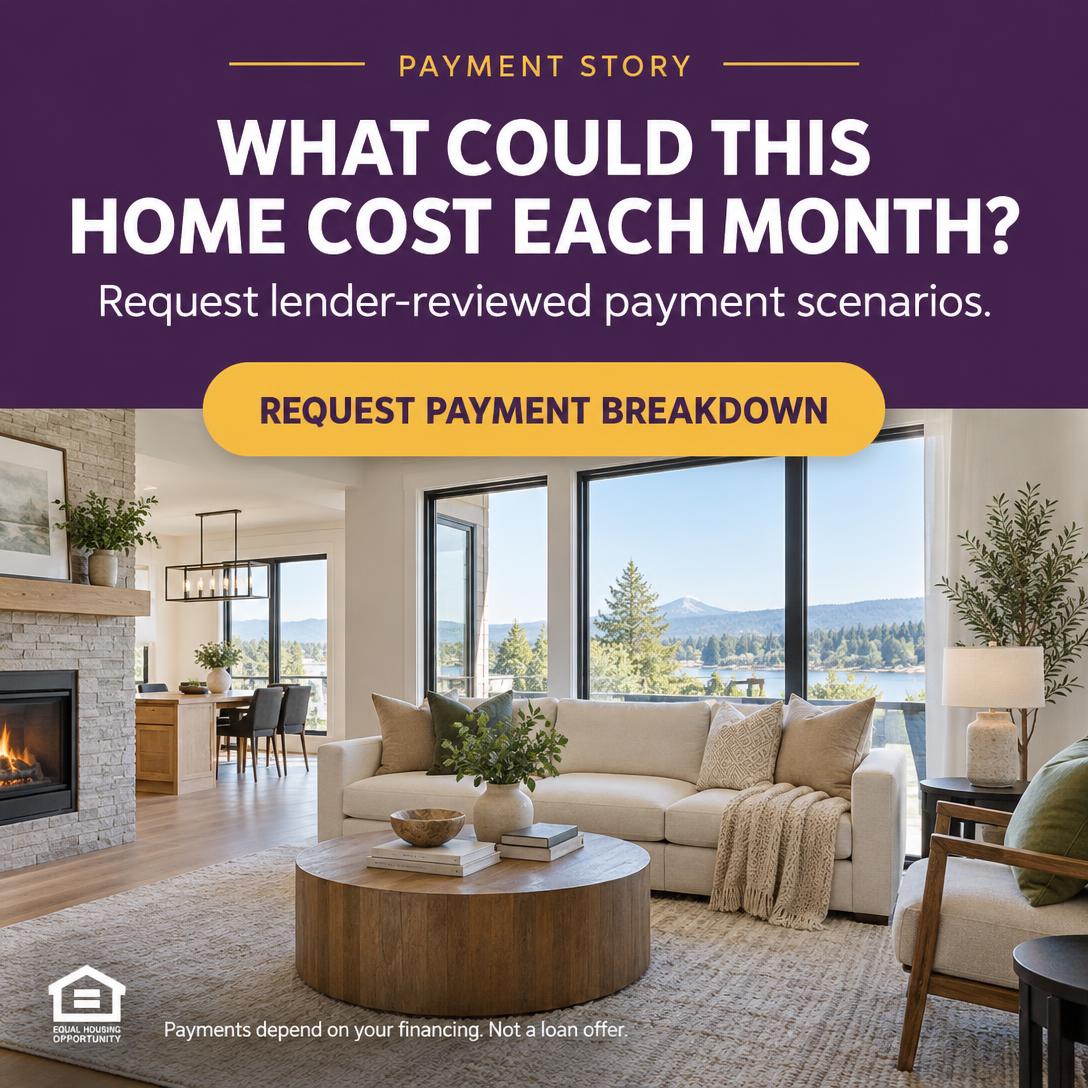
What could this home cost each month?
Your monthly payment depends on your financing. Explore this home and request lender-reviewed payment scenarios, including seller-funded options if available.
CTA button: Request Payment Breakdown
Illustrative example creative — replace with your listing photos.

A little help at closing?
Seller offering up to [verified amount] toward eligible closing costs, subject to program limits. Request details and schedule a tour.
CTA button: Get Details
Illustrative example creative — replace with your listing photos.

Take another look.
This [area] home has a new seller incentive worth understanding. View photos, verified terms and eligibility details.
CTA button: View Property
Illustrative example creative — replace with your listing photos.
Keep the Facebook lead form short: name, email, phone, and one interest question — "Tour / Offer details / Lender-reviewed payment comparison." The form must link your privacy policy, and you need proper permission and consent in place before sending any texts. Route property leads to the agent or lender as appropriate.
Thanks for your interest in [address]. Would you prefer full incentive details, a tour, or a lender-reviewed payment comparison?
Chapter 07
Seller Lead Generation
Use affordability as the seller lead magnet.
The same affordability story that moves buyers also attracts sellers — because every would-be seller with a stale listing is quietly asking why nothing is working. Four seller-facing angles:

Before you cut the price…
See how price adjustments and seller incentives compare for your property.
CTA button: Get My Options
Illustrative example creative — replace with your listing photos.

Selling this year? Bring a plan.
Explore a modern listing strategy built around monthly affordability and online visibility.
CTA button: Build My Plan
Illustrative example creative — replace with your listing photos.

Your home needs a new story.
A refreshed offer, compelling creative and a measurable distribution plan can create a new reason for buyers to look.
CTA button: See the Strategy
Illustrative example creative — replace with your listing photos.

What buyers notice now.
Understand the role of monthly payments and cash-to-close in buyer decisions.
CTA button: Get the Seller Guide
Illustrative example creative — replace with your listing photos.
The lead magnet is a working session, not a PDF: a custom local competitive review, a three-option net worksheet, two example ad creatives for their home, and a short meeting to walk through them.
Thanks for requesting the listing strategy guide. I can put together a quick comparison of a price change, buyer incentive, and combined approach for your property. What is your ideal selling timeframe?
You now have two streams running: buyer prospects for the advertised property, and seller prospects for your own pipeline. The same skill set feeds both.
Chapter 08
The Walled Garden Workflow
From listing URL to a live marketing campaign.
Everything in this playbook is executable by hand — but the production work is where most agents stall. Walled Garden turns a listing URL or manually entered details, plus a seller-approved offer, into ad images, headlines, copy, lead forms, and a Facebook & Instagram campaign setup — with human review and approvals before anything launches.
- 01
Import the listing
Paste a listing URL (Zillow, Realtor.com, etc.) or enter the details manually. There is no MLS/IDX integration — you control exactly what goes in.
- 02
Add the verified offer
Insert the seller-approved, lender-confirmed incentive and any required disclosures.
- 03
Generate the creative
Walled Garden produces ad images, headline options, body copy and the lead form.
- 04
Review two or more angles
Compare a property-first angle against an affordability-first angle, and check Meta Housing and financial-advertising requirements before approving.
- 05
Launch
Publish the approved ad to Facebook & Instagram.
- 06
Follow up and report
Work the inquiries, measure quality, and share clear seller updates.
The strongest campaigns carry three complementary messages at once: the home itself, the verified offer, and a reason to take another look. Walled Garden helps you build all three from the same approved inputs.
See the workflow on your own listing
Book a live demo and we will walk through a real campaign setup — no performance promises, just the actual product.
Book a demoChapter 09
The 14-Day Action Plan
A launch calendar sellers can understand.
Verify and approve
Confirm pricing position and comps, get lender-verified incentive terms, obtain seller approval, and run the seller net for each scenario.
Produce and launch
Create 2–4 image and ad variations (Walled Garden handles the heavy lifting), complete the legal and compliance check, test the lead form and routing, then launch.
First report
Report reach, clicks, inquiries and qualified appointments to the seller — early, even when the numbers are small.
Optimize
Refresh creative and tighten first response. Make only seller-approved adjustments to the offer.
Decide
Deliver a seller report on showings, offers, objections and net scenarios. Decide together: adjust, maintain, reprice, or improve condition.
Measure four groups. Visibility (reach, clicks, landing-page visits, cost). Buyer intent (qualified inquiries, tour requests, payment-breakdown requests). Market response (showings, offers, objections). Seller outcome and operations (offer quality, seller net, timeline, response time, routing).
Here is who saw the home, who raised a hand, what qualified buyers are telling us, and what I recommend we change next.
Pre-launch checklist
- Property data verified against the listing
- Photography rights confirmed for ad use
- Seller approval on the offer, in writing
- Current comps reviewed
- Lender-verified incentive terms
- Seller net sheet for each scenario
- Meta Housing Special Ad Category applied
- Privacy policy linked; text consent in place
- Tracking and lead routing tested end to end
- Follow-up owner and response time agreed
Chapter 10
Accuracy, Compliance & Sources
What to verify before any of this goes live.
This guide is education, not a financing quote. Temporary buydowns are seller-funded subsidies with scheduled increases to the full note-rate obligation; they carry borrower qualifying requirements and funding limits. Seller credit limits vary by loan program, a credit cannot automatically be given as cash, and it cannot cover prohibited buyer contributions.
Under CFPB Regulation Z, advertising specific mortgage rates or payment examples can trigger required APR, payment, time-period and tax/insurance disclosures — have a lender or compliance professional review any actual ad before it runs. HUD Fair Housing rules and Meta's Housing Special Ad Category apply to every housing ad: no lookalike audiences, no age or gender exclusions, no ZIP-code targeting, and a 15-mile minimum location radius. Follow the current published rules, not this summary. If a lender and an agent co-market, review the arrangement for RESPA and state rules first. Nothing here guarantees a sale, lead counts, loan terms, or results.
Primary sources
- NAR — Existing-Home Sales statistics
- Freddie Mac — Primary Mortgage Market Survey archive
- Fannie Mae — Temporary Interest Rate Buydowns (B2-1.4-04)
- Fannie Mae — Interested Party Contributions (B3-4.1-02)
- CFPB — Regulation Z, 12 CFR 1026.24 (advertising)
- HUD — FHEO Guidance on Advertising through Digital Platforms
Educational content only. Local markets vary. Market figures are an October 2026 historical snapshot from the sources above. This is not legal, financial, or lending advice.
You bring the listing. We make the campaign easier.
Turn a listing URL and a seller-approved offer into ad creative, lead forms, and a Facebook & Instagram campaign setup — with human review before launch.